Lord Bhattacharyya and the India–UK Industrial Connection
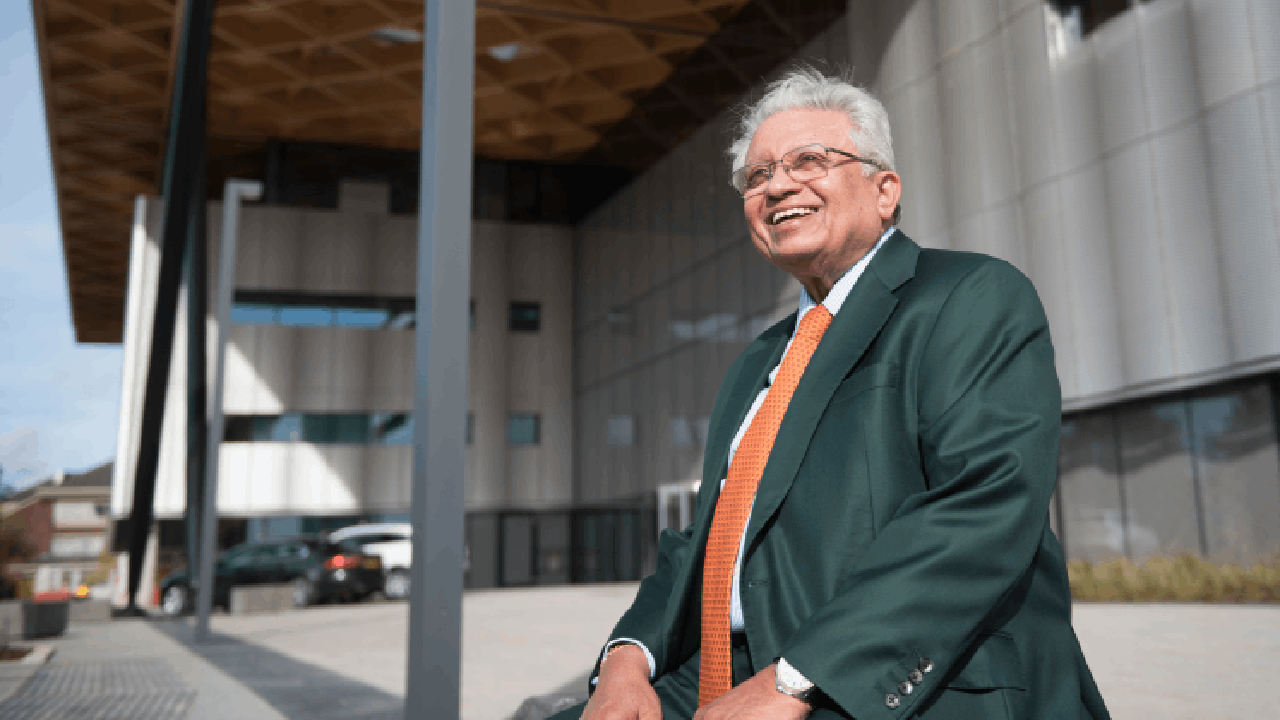
If you want to understand why advanced manufacturing in the West Midlands still attracts global capital, you start with Professor Lord Kumar Bhattacharyya.
The institutional model he built still underpins the region’s competitiveness today.
At a time when investors are looking for credible ecosystems, places where research translates into production, where skills align with industry, and where policy supports long-term growth, the West Midlands offers something rare: we offer a mature, proven partnership between academia, government and global manufacturers. That model began with Bhattacharyya.
All manufacturing industries, in order to be competitive, have to be knowledge-based.
– Professor Lord Kumar Bhattacharyya
From India to Britain, With Purpose
Born in 1940 in Dhaka, then part of British India, Bhattacharyya grew up in an academic household. His father’s career as a distinguished professor of physical chemistry shaped his early exposure to education and, more importantly, instilled a practical conviction that knowledge should be applied, not abstracted.
After studying engineering at IIT Kharagpur, he came to Britain in 1961 to undertake a graduate apprenticeship with Lucas Industries. That experience gave him first-hand insight into the structural challenges facing British manufacturing and shaped his belief in linking academic research to business needs.
WMG: A New Model for a New Economy
Bhattacharyya became Professor of Manufacturing Systems at the University of Warwick in 1980, where he went on to found the Warwick Manufacturing Group (WMG).
It was an institutional break from tradition.
Warwick Manufacturing Group was designed as a permanent partnership between academia, government, and industry. Rather than operating as a traditional academic department, it works directly with manufacturers across automotive, aerospace, digital technologies and energy systems.
Engineers study while working on real industrial challenges, companies co-locate research teams on campus, and technologies are tested at production scale. From the start, Bhattacharyya emphasised continuing professional development, modular courses, and recruiting staff with industry experience – notably through initiatives like the Integrated Graduate Development Scheme. The aim was not simply to study industry, but to improve it in real time.
We need to get rid of the idea that applied research is second rate. I’m not saying that we don’t need pure research. We should support that and make it stronger. It’s not a question of either/or. It’s both.
– Professor Lord Kumar Bhattacharyya
At the time, WMG was an unconventional idea. It refused to separate academic research from industrial application. Instead, it shaped courses around real manufacturing problems, and treated industry collaboration as a strength rather than a compromise.
The model worked. WMG grew, attracting global manufacturers, government backing and long-term investment, helping to reposition the West Midlands not as a region of industrial nostalgia but as a centre for advanced manufacturing, applied research and future mobility. Initiatives such as the National Automotive Innovation Centre grew directly from this approach, creating production-scale environments where electrification, propulsion systems and next-generation mobility technologies are developed in close partnership with industry leaders, including Jaguar Land Rover and Tata Motors.
When Margaret Thatcher opened WMG’s Advanced Technology Centre in 1990, she called Bhattacharyya “a true pioneer.” Later, Tony Blair would describe WMG as an outstanding example of academic excellence meeting industrial relevance. These moments capture something rare, a British Institution that delivered both.
Professor Bhattacharyya’s name is known the world over. It has been his persistence, combined with the strength of the university, Rolls-Royce and Rover, that has got this Advanced Technology Centre up and running.
– Margaret Thatcher, Former Prime Minister
Global Capital, Local Commitment
Bhattacharyya’s influence extended well beyond the university. He played a key role in strengthening industrial ties between UK manufacturing and Indian industry, one of the most notable examples being when Tata Motors acquired Jaguar Land Rover in 2008.
The deal between Tata and JLR was met with considerable uncertainty in the UK. There were concerns about foreign ownership, job security, and the long-term future of Britain’s automotive industry. At this critical moment, Bhattacharyya played an essential bridging role.
I was concerned that if JLR goes, there will be no car industry left in the UK.
– Professor Lord Kumar Bhattacharyya
Bhattacharyya helped build trust on both sides. Drawing on his deep relationships across the British government, industry, and Indian business leadership, he reassured stakeholders that Tata’s intentions were long-term and strategic. The result was reinvestment, growth, and stability. Jaguar Land Rover remained rooted in the West Midlands, Tata gained a world-class engineering base, and the region retained thousands of high-value jobs. Bhattacharyya also fostered partnerships with Indian industry leaders such as Venu Srinivasan and TVS Motor Company, now owners of Norton in Solihull.
Thanks to him and his focus on education, he trained a whole generation of engineers and managers in our company and laid the foundation for building competence in styling, design, robust engineering and quality.
–Venu Srinivasan, Chairman, TVS Motor Company
The acquisition became tangible proof that long-term Indian investment, anchored in regional expertise and institutional depth, can deliver stability, reinvestment and global competitiveness for British industry.
Passionate in his belief that the UK has the creativity, the technical strength and the entrepreneurship in the manufacturing sector to regain global leadership. Kumar sparkles like a diamond in sunlight.
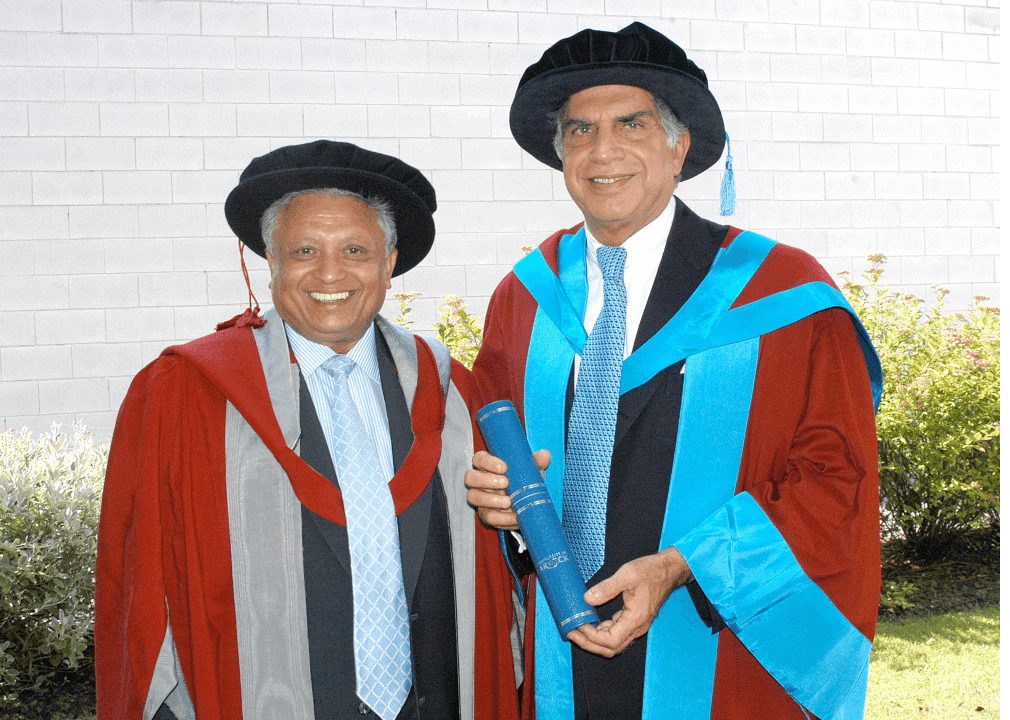
– Ratan Tata, Former Chairman, Tata Group
When Experience Reached Westminster
Made a life peer in 2004, Bhattacharyya brought to the House of Lords something Westminster often lacks: deep, lived expertise in manufacturing skills and industrial systems. He shaped debates on industrial strategy, education, and innovation through practical insight shaped by real-world experience.
A Legacy That Endures
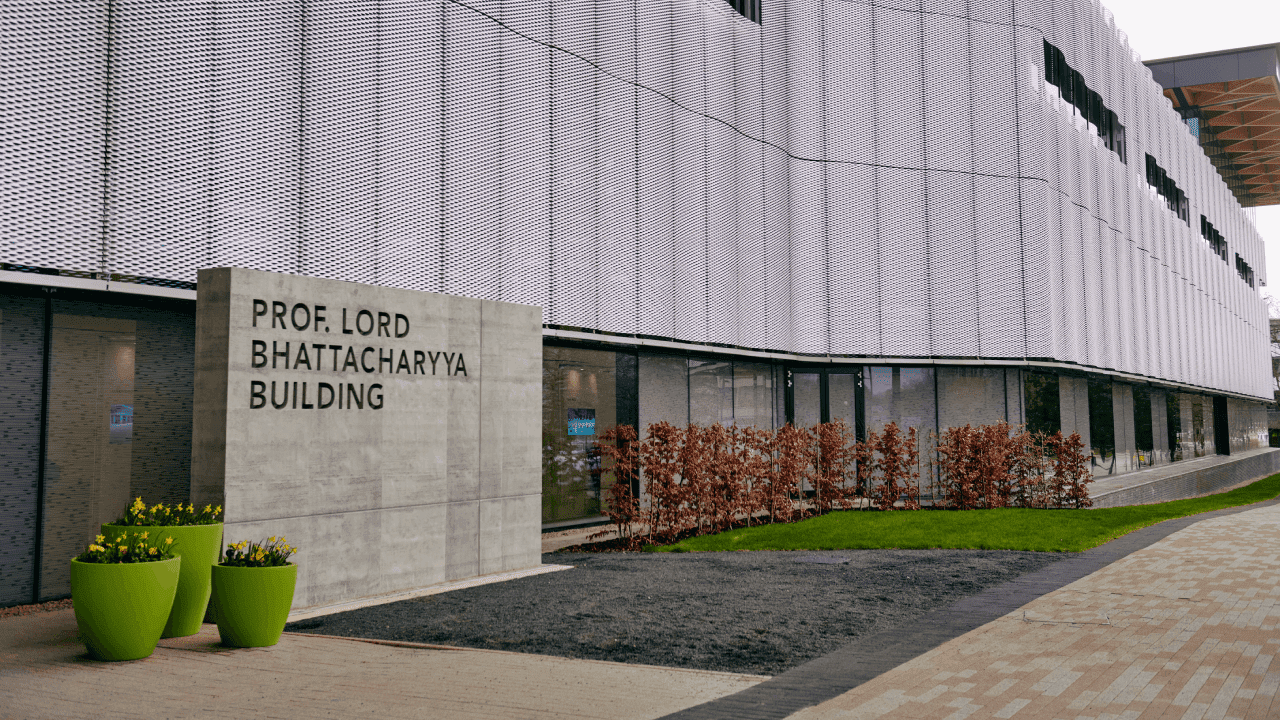
Bhattacharyya died in 2019, but his impact across the West Midlands, the UK, and the world continues. A major building at the University of Warwick now bears his name, home to the National Automotive Innovation Centre – a partnership between WMG, Tata Motors, Jaguar Land Rover and the Government which continues his legacy of industry-changing research.
Working across the university and across Bhattacharyya’s adopted home region, WMG endures as a living institution, training people, attracting investment, and shaping how the region competes globally.