Why the West Midlands Is Shaping the Future of BPFS
Chris is the Tech & Services Strategic Lead at West Midlands Growth Company, where he supports international businesses investing and expanding across the region. He shares his perspective on why the West Midlands is shaping the future of business, professional and financial services.

Recent analysis from Oxford Economics highlights what we are seeing on the ground every day in the West Midlands: that the region continues to be a leading engine of UK growth and, amid global uncertainty, is emerging as a national centre of regeneration, transformation and ambition across both established and emerging sectors.
Driven by a regional boom in high-value business and professional services, where employment in the West Midlands grew by an average of 2.8% between 2020 and 2025 compared with the national rate of 1.8%, we’re seeing a momentum that is creating a powerful mix of scale, talent and global reach.
Wider challenges remain, of course, both nationally and internationally.
But despite pressures, the West Midlands remains a place where deep industrial strengths and digital innovations are converging. Spearheaded by a balanced professional and financial services base, alongside a fast-growing tech sector economy, that convergence is becoming a defining competitive advantage for investors.
Regeneration Shaping Connectivity
Large-scale infrastructure should be about shortening the distance between talent, clients, innovation and adjacent industries. It’s a regular theme in conversations we have with leaders – the importance of connectivity and density within modern innovation ecosystems.
Already, the West Midlands is reshaping the way in which sectors, talent and investment are coming together, defining what market advantages look like within the future of next-generation services.
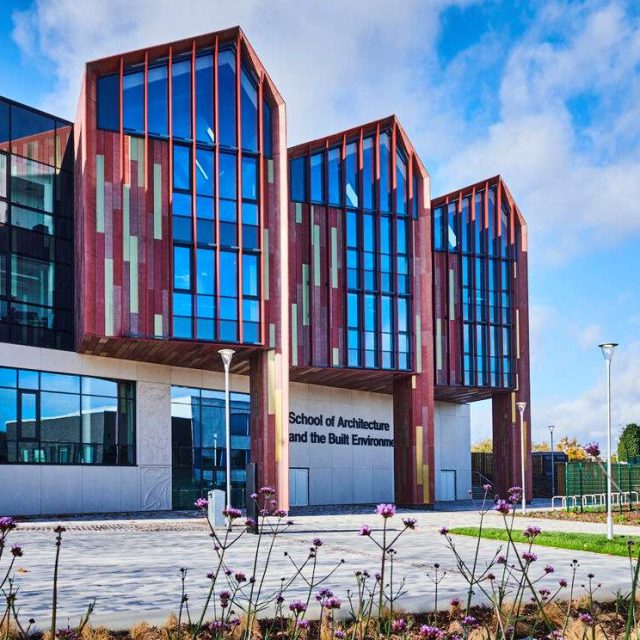
In Birmingham alone, where the business, professional and financial services (BPFS) sector contributes £12.4 billion to the regional economy, regeneration projects including Paradise, the Sports Quarter, Birmingham Central Heart, Birmingham Knowledge Quarter and Digbeth Creative Quarter are merging legacy industrial expertise with emerging innovation assets.
For BPFS firms, this changes things, as it’s creating a far richer environment for innovative partnerships. By facilitating quicker knowledge transfer, Birmingham is emerging as a destination for productivity and deal-making.
In a region where the population is predicted to swell by an additional 520,000 over the next two decades – equivalent to adding a city the size of Leicester – the West Midlands is creating the infrastructure, accessibility and workforce density increasingly required by modern professional services firms to scale.
The result for investors? A region engineered around connectivity and cross-sector innovation networks. This reduces operational friction and helps futureproof the business within it.
Paradise Birmingham
Perfectly positioned in the heart of the city within the Colmore Business District, the £1.2bn Paradise estate is a nationally significant regeneration scheme which is redefining Birmingham’s commercial landscape, while providing the connected, collaborative environment required for BPFS firms to innovate and expand. Comprising One Centenary Way, Three Chamberlain Square and The Octagon – a 370-bed build-to-rent scheme – the 17-acre estate delivers 1.3m sq ft of Grade A office space, with 120,000 sq ft of supporting leisure and retail space.
Developed by MEPC, the overall development is expected to generate around 12,000 jobs for the city. It has already attracted a wave of blue-chip occupiers, including global investment bank Goldman Sachs, global environmental consultancy Arup, Big 4 accountancy firms Deloitte, PwC and EY, and national and multinational law firms, Mills & Reeve, DLA Piper and Eversheds Sutherland, with more expected to follow in their footsteps over the coming years.

Forward-Facing Fintech
Whilst innovation remains a key component of growth and transition, achieving it comes at a price. Looking ahead, the challenge of technology within professional services is no longer rooted in identifying it, but in integrating it.
Fintech is very much the gateway through which traditional financial services are modernising, and, for investors, that shifts the priority to locating within operating environments capable of accelerating technological adoption.
It’s why the West Midlands matters now.
Here, the region has developed a strong financial environment built around Fintech adoption, which is reducing the distance between tech-led innovation and commercial implementation for firms.
Cluster organisations such as SuperTech WM play a significant role in shortening this journey by working with firms to move from experimentation to implementation more quickly. Combined with the presence of global firms including HSBC, Deutsche Bank, Lloyds and BNP Paribas, what we are seeing in the West Midlands is technology being integrated and scaled across both financial and professional services at the highest level.
As the region encourages innovation adoption and application, the outcome for corporates is a reduction in cost and complexities linked to digital transformation and commercial growth.

A New Regulatory Advantage
To navigate the future of professional services, businesses are increasingly reliant on the robustness and adaptability of legal and regulatory institutions.
Rather than acting as a support function, modern economies require forward-thinking legal and advisory partners capable of helping firms navigate AI, data governance, and emerging technologies with confidence. Within professional services, legal frameworks must function less like gatekeepers and more like guides.
This is where the West Midlands is differentiating itself.
Behind the strength of our BPFS sector sits one of the UK’s most comprehensive legal, regulatory, and advisory ecosystems. This breadth of expertise is becoming increasingly valuable as regulation expands across frontier technologies.
For ambitious firms, the West Midlands law and regulatory landscape is evolving alongside industry. The emergence of a maturing Lawtech community reinforces this momentum by reducing uncertainty around strategic decision making. This helps lower execution risk and creates an environment where executives can strategise and scale with greater confidence.
Recent regional expansions by Fieldfisher, Talbots Law and Mills & Reeve are testament to this. In a UK economy where speed and confidence are crucial components of growth, these capabilities are becoming increasingly important.
The region is a genuine hub for innovation and collaboration. Our partnership with Solihull HQ-ed BNP Paribas Personal Finance has given fintech innovators real-world challenges to solve, with some participants progressing to commercial contracts with them and other financial services institutions.
The unique Legal Open Innovation Lab has done the same for law firms, academia and regulators — connecting them directly with leading AI firms to accelerate market need and fit – which is unseen elsewhere in the UK.
Rising Professional Services Talent Pool
Talent is a decisive factor within all sectors, yet in today’s landscape it is often treated as a secondary consideration behind infrastructure and technology.
Whilst the overall quality of professional services talent remains a key facet to the success of any economy, moving forward the adaptability, skill transferability and density of that talent pool will become a strategic differentiator for firms planning into the next decade.
The West Midlands leads all UK Combined Authorities in both the concentration and growth of professional services skills, with the highest number of people employed across technology, banking, finance, legal and accounting roles.
With a third of a million professionals, we are already seeing the West Midlands’ BPFS workforce function less as a collection of individual pools and more as an integrated environment full of transferable expertise. Skills are increasingly transferable across financial services, professional business services and technology, enabling talent to move between BPFS firms and other priority sectors of the West Midlands economy.
This all matters as expertise developed in financial services, legal and technology is becoming increasingly transferable across emerging disciplines such as Fintech, Lawtech and AI-enabled business services.
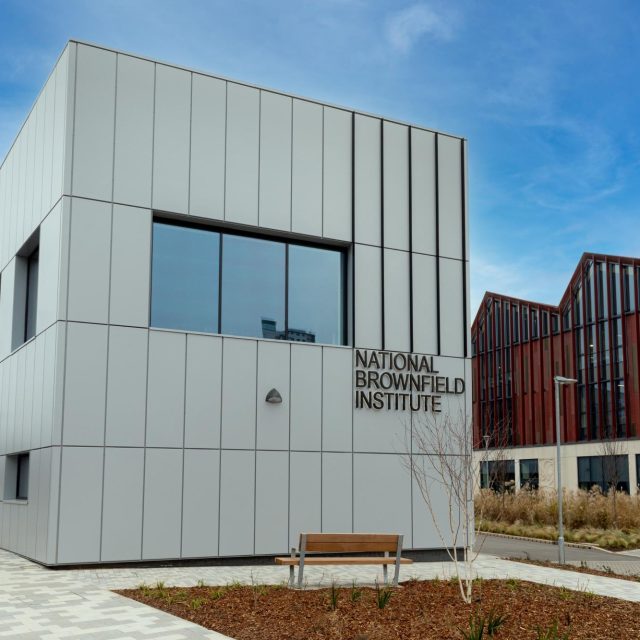
Innovation hubs like STEAMhouse and the Aston Business Hub, both based inside the Birmingham Knowledge Quarter, are fundamental examples of academic talent being upskilled in both traditional and tech-enabled skill sets.
The result is a talent pool capable of evolving and adapting into new operating models. In turn, this allows leaders to innovate and respond more quickly to changing market demands – that is the competitive edge the West Midlands is beginning to build.

It Starts Here
Industries are navigating a new era of change defined by workforce expectation, technological change, and regulatory complexity. Whilst BPFS is entering a new phase where growth depends on the ability to connect technology, regulation, talent and real-economy demand, the West Midlands is one of the key places where that model is taking shape.
Regeneration is improving connectivity. Fintech is accelerating technology adoption. Lawtech is reshaping regulatory capability. A rapidly evolving talent base is ensuring those advantages continue to compound.
Modern business services are changing. Advantages are no longer determined by individual assets in isolation, but by the ability of regions to connect all the above.
If the last decade established the West Midlands as a growing force in the global professional services economy, the next will define it as one of the places shaping what the sector becomes.