Nonacus

What if detecting bladder cancer didn’t start with a camera?
For a century, bladder cancer diagnosis has started the same way. Nonacus asked whether it had to.
For over a century, the standard way of detecting bladder cancer has relied on cystoscopy: a clinician inserting a camera into the bladder to look for visible signs of cancer. It is an invasive, hospital-based procedure that requires specialist clinical time, and patients can face long waits for answers.
When Birmingham-based life sciences company Nonacus looked at the problem, they saw a fundamental flaw in the process. They challenged a long-established assumption: what if cancer could be detected through molecular evidence without actually having to visually inspect the site or take a biopsy?
Our mission is to bring early cancer testing to everyone on the planet, from right here in Birmingham.
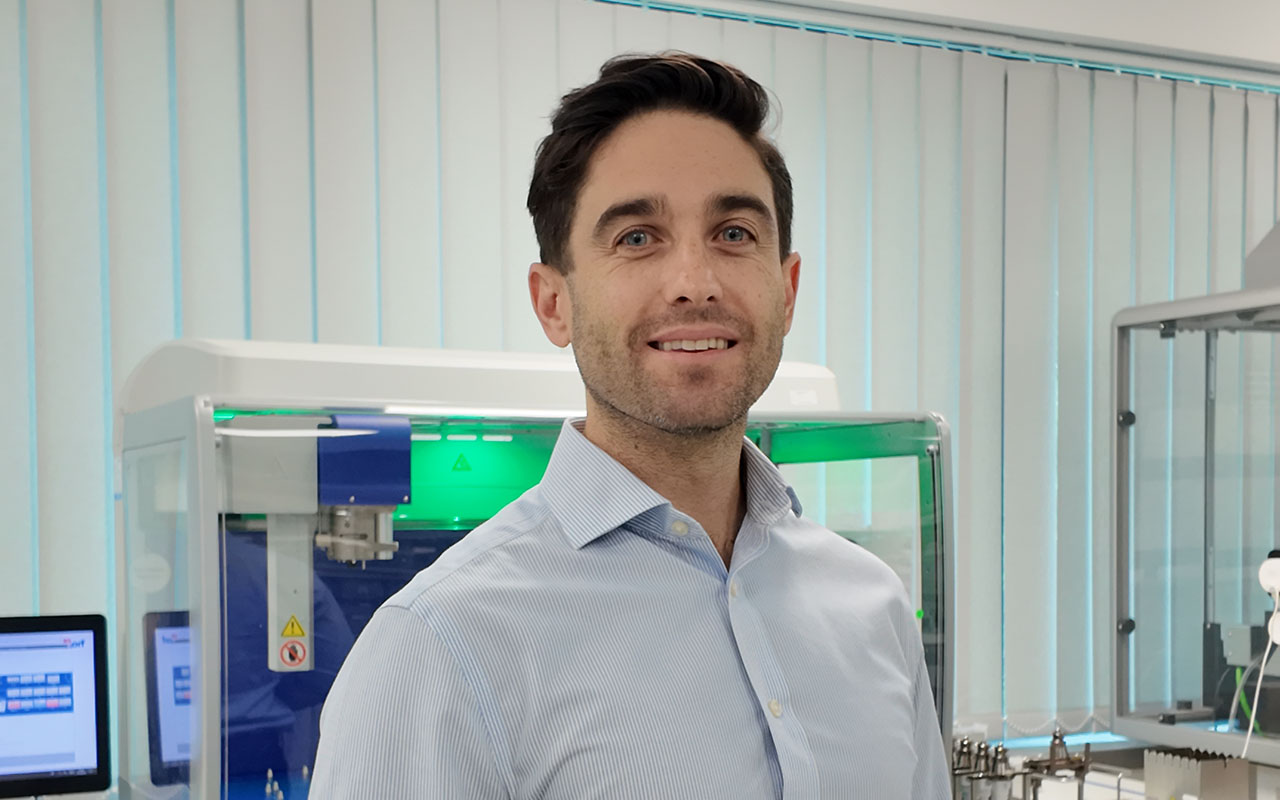
Urine is a rich source of genetic information. Nonacus asked whether that information could be used to detect bladder cancer without starting with a camera.
The way that bladder cancer is diagnosed today and has been for the last hundred years typically that will take between one and four months for a patient to be seen because it’s an invasive hospital-based procedure it takes a lot of clinical time and so there are waiting lists understandably in the NHS for this procedure to take place.
A different way to detect cancer
Nonacus chose bladder cancer as a starting point because it is one of the UK’s top ten most prevalent cancers. That led to the creation of GALEAS Bladder – an at-home urine test which can find the presence of tiny fragments of tumour DNA in urine. A sample is collected at home and sent to Nonacus’ Birmingham lab, where scientists extract genetic information and look for mutated DNA – what Jeff describes as the “calling card of cancer”.
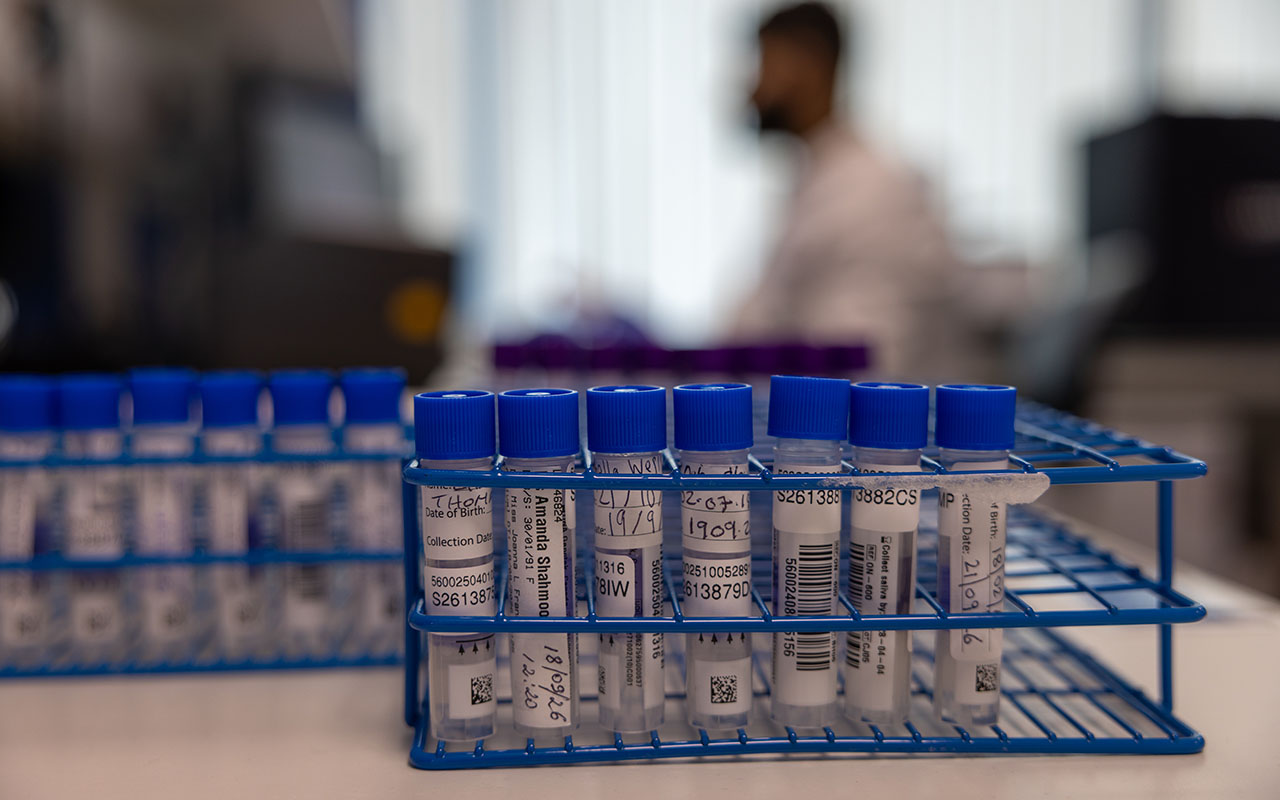
If a doctor can see quickly that there is evidence that cancer is present, they can skip this person right to the front of the queue, get them treated, sometimes same day remove their cancer.
GALEAS Bladder can return a result in two weeks or less. By comparison, Jeff says the existing hospital-based pathway can take between one and four months for a patient to be seen. That can help clinicians prioritise patients with molecular evidence of cancer, while helping them decide where an immediate cystoscopy can safely be deferred. It also has the potential to reduce the cost and clinical capacity associated with invasive diagnostic procedures.
Nonacus means ‘no needle’ in Latin and that’s our approach to absolutely everything. We want to help every single person on the planet find cancer earlier and we think the best way to do that is non-invasive methods.
Built in Birmingham
GALEAS Bladder builds on pioneering research by Professor Richard Bryan and Dr Douglas Ward at the University of Birmingham’s Bladder Cancer Research Centre and was developed through a long-running collaboration between the University and Nonacus.
Two of Nonacus’ three founders are University of Birmingham graduates, and the company spent the first four or five years of its life incubated at the University of Birmingham’s BioHub.
The West Midlands’ diverse patient population has also provided a strong environment for trialing new innovations, helping Nonacus develop diagnostics for a population that better reflects the global markets it wants to serve. The company has also worked closely with local hospitals, particularly Birmingham Women’s and Children’s Hospital.
Much of the success that we’ve had has been in relation to the partnerships that we’ve had, the research that we’ve had on our doorstep, and also the hugely diverse patient population that exists in the West Midlands which makes trialing new innovations actually a superb place for that because it represents more of a global footprint of nationalities and ethnicities.
Perhaps unusually, Nonacus doesn’t just design and develop its early cancer tests in Birmingham – it manufactures them on site too. Its single integrated facility gives the business access to local talent, and the impact is beginning to extend beyond Nonacus itself. Over the last few years, three companies have spun out of or started up from staff trained there, with scientists going on to found their own businesses in the Midlands.
We have a single integrated facility here in Birmingham, we’ve got access to talent that believes in our mission and wants to stay a part of it for the long term.
Today, Nonacus supplies its products and services to customers in more than 38 countries worldwide. GALEAS Bladder is now in routine use across nine sites in the UK and Ireland, including a couple in the West Midlands, with rollout continuing. Nonacus says the test can help clinicians prioritise patients who need urgent investigation, make better use of cystoscopy capacity, and get patients answers faster.
Looking ahead, Nonacus is working with academics in the Midlands to apply the same non-invasive principle to other cancer types. Its ambition is to replicate the model behind GALEAS Bladder across more cancers, helping more patients access earlier, less invasive testing.
It Starts Here.
More West Midlands Innovations in Action
Faster Horse Newmanry Labs
It Starts Here
Faster Horse Hausbots
It Starts Here

Faster Horse Maeving
It Starts Here